
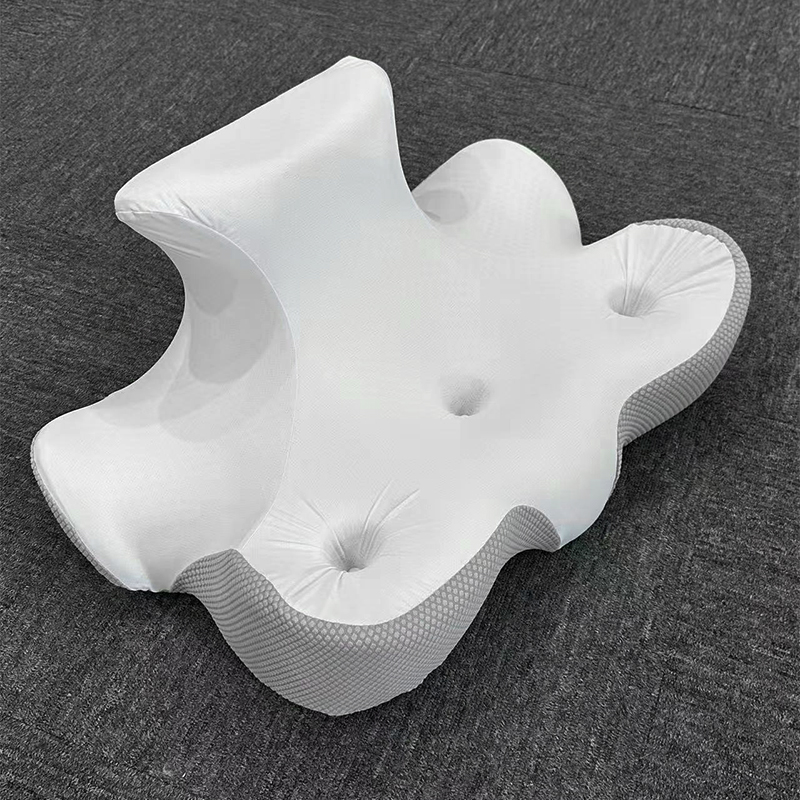
A pillow is the textile a guest interacts with most intimately, and one of the few where a poor choice produces immediate complaints. Yet it is often specified last, and often by copying whatever the previous supplier provided.
These are the pillow questions hotel buyers ask most often when building or refreshing a specification.
1. What filling types are available, and how do they differ?
Four families cover most hotel requirements:
- Polyester fibre fill. The hotel workhorse. Low cost, hypoallergenic, machine washable and available in a wide range of lofts. The limitation is that fibre compresses over time and gradually loses loft.
- Microfibre. Finer filaments than standard polyester, which gives a softer, denser hand closer to down. Holds loft better than coarse fibre but costs more.
- Natural down and feather. The premium option. Excellent loft retention, breathability and thermal behaviour. Requires more careful laundering and may not suit guests with allergies.
- Latex and foam. Memory or latex cores provide firm, consistent support and hold shape well. Less common in standard rooms but used where support consistency matters.
Most hotels use a mix: fibre or microfibre as the standard, with a natural-fill option available on request for premium rooms.
2. How does loft relate to firmness?
Loft and firmness are related but not the same thing. Loft is how tall the pillow sits when relaxed — the amount of filling and the fill power determine it. Firmness is how much resistance the pillow gives under a load.
Two pillows at the same loft can differ in firmness if the filling density differs. This is why specifying only a loft figure, or only a "soft/medium/firm" label, leaves room for a wide range of products to be supplied against it.
The practical approach is to specify both: a loft range measured under a defined load, and a firmness descriptor tied to a compression test. Then the delivered pillows can actually be checked.
3. Why do hotel pillows go flat so quickly?
Three causes, and only one of them is the pillow's fault:
- Fibre fatigue. Repeated compression and laundering cause fibre fill to break down and lose resilience. Good microfibre resists this longer than coarse polyester.
- Improper laundering. Overloading the machine, high drying temperatures and excessive detergent all accelerate filling degradation. Drying is the most damaging step for fibre pillows.
- Guest misuse. Folding, sitting on or stacking pillows accelerates compression damage. This is a real factor in high-occupancy properties.
Because two of the three causes sit with the laundry and the guest, buying a heavier or more expensive pillow does not automatically extend its life. Laundry practice and rotation do.
4. How long should a hotel pillow last?
It depends on the filling and the laundering regime, but useful planning ranges are:
- Polyester fibre — shorter service life, replaced most frequently, and the reason many properties keep fibre pillows on a rolling replacement programme.
- Microfibre — meaningfully longer than standard fibre at a moderate cost premium.
- Down and feather — the longest life if laundered correctly, with periodic refreshing.
- Latex or foam cores — long life for the core, though the cover still wears and needs replacement.
Rather than relying on general ranges, ask the supplier for guidance on how many commercial wash cycles the filling is expected to withstand, and build your replacement cycle from that figure.
5. How many pillows should each room have?
The count is a property decision, but the operational implication matters for procurement. Most upscale properties place two pillows per guest position, often in different lofts so the guest can choose. That doubles the inventory, the laundry volume and the storage requirement compared with a single-pillow standard.
If you plan to offer a soft and a firm option, decide it before you tender — it changes the quantity, the storage and the laundry load, not just the guest experience.
6. What belongs in a pillow specification?
- Filling type and the exact composition, including any blend ratio
- Fill weight per pillow, not just a loft description
- Loft, measured under a defined load, with a tolerance
- Firmness descriptor with a corresponding compression figure
- Outer fabric: thread count, fibre content and weave
- Cover closure type and whether it is removable or sewn shut
- Barrier properties, if the property requires dust-mite or allergen control
- Washability instructions and the maximum recommended cycle temperature
- Expected service life in wash cycles, as a stated figure
Two entries on that list are frequently omitted and frequently regretted: fill weight per pillow, and expected service life in cycles. Together they turn a pillow from a feel-based purchase into something you can compare and reorder reliably.
7. Should the cover be washable separately from the filling?
It can be, and the choice has consequences. A removable cover allows the outer fabric to be cleaned more aggressively without stressing the filling, which can extend the life of a premium pillow. The trade-off is higher cost and more handling in the laundry.
If the cover is sewn shut, the whole pillow is laundered together, which is simpler but exposes the filling to drying damage every time. Many properties pair a washable sewn pillow with a separate protective pillowcase from the linen set — a middle path that is easy to operate.
The short answer
Pillow selection is three decisions: filling for feel and cost, loft and firmness for support, and service life for replacement planning. Fibre and microfibre cover the mainstream, natural fill covers premium rooms, and latex covers cases where consistent support matters most.
Specify fill weight and expected cycle life as numbers, not impressions, and let the laundry regime inform the choice as much as the guest expectation does. If you tell a hotel textile supplier your property tier, the pillow count per room and your laundry capability, they can propose a filling and a replacement cycle that holds both comfort and cost within target.